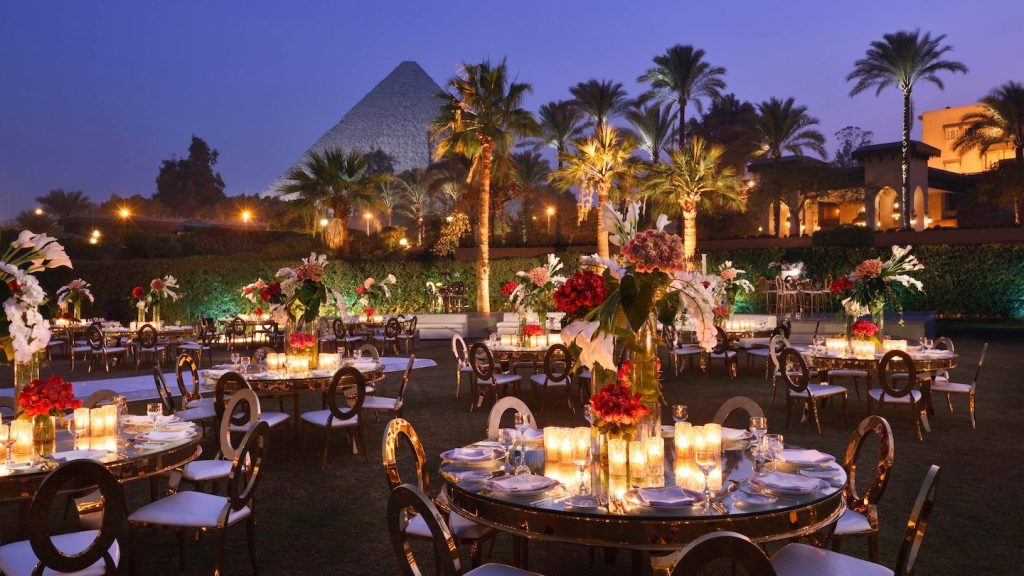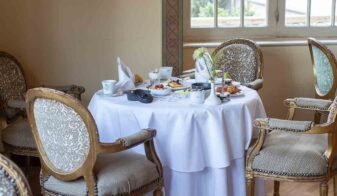
Fine dining in Egypt happens mostly inside the grand hotels. We book tables at the Marriott Mena House with the Great Pyramid in the window, at the 1902 Restaurant inside the Sofitel Legend Old Cataract in Aswan, and at the Sofitel Winter Palace in Luxor — and we arrange private dinners at places that are not restaurants at all.
Each of the venues below is a property we work with directly, so a reservation comes with the table you asked for rather than whatever is left. Dinner can be arranged as a standalone evening or built into a day tour or a longer package.
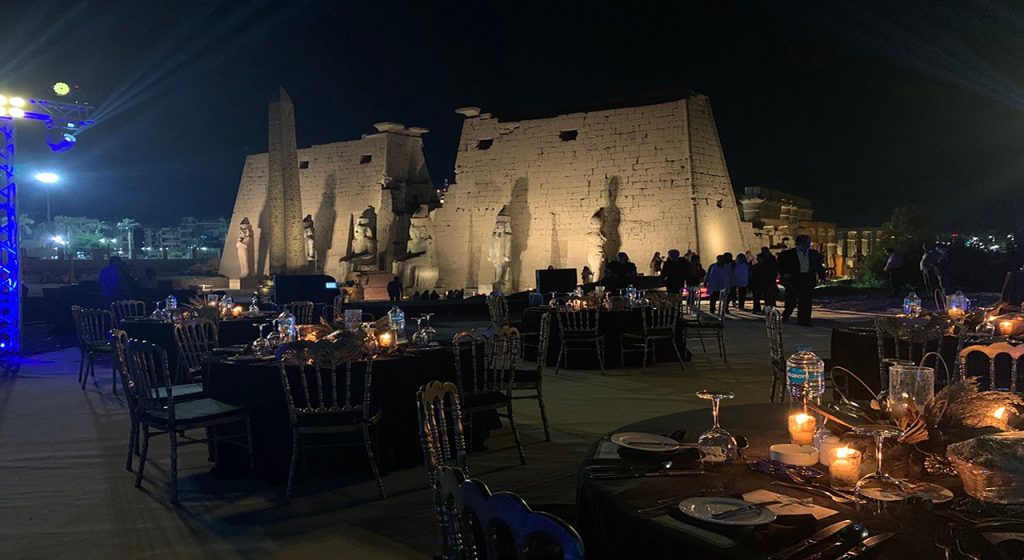
The dinners people remember in Egypt are usually not in a dining room. A private table inside the Luxor Temple colonnade after the site closes; dinner on the Marriott Mena House terrace with the Great Pyramid lit behind you; the Old Cataract's Nile-facing terrace at the hour the light goes. These are arranged individually, with permission where a monument is involved, and they need more notice than a restaurant booking.
Egypt has a national cuisine worth eating on purpose — koshari, ful medames, molokhia, om ali. The harder question is not what to eat but where. Hotel dining rooms rarely serve the best version of any of them, and the best version is usually somewhere with no English menu and a queue at lunchtime. Your guide can order in Arabic and knows which places locals actually go to, which is a different list from the one on a concierge's card.
From award-winning restaurants and luxury hotel dining venues to exclusive private dinners and breathtaking Nile-view experiences, our team will arrange unforgettable culinary moments tailored to your taste and preferences.
Koshari — rice, lentils, macaroni and chickpeas under a spiced tomato sauce and crisp fried onions. It is Egypt’s national dish, eaten daily across the country and served everywhere from street counters to hotel restaurants.
Ful medames — fava beans slow-cooked and dressed with olive oil, lemon and cumin — usually served with ta’ameya (Egyptian falafel, made from fava beans rather than chickpeas), eggs, white cheese and fresh baladi bread.
Avoid tap water; drink sealed bottled water and skip ice in informal venues. Raw salads and unpeeled fruit rinsed in tap water carry the most risk. Hotel and established restaurants filter their water, so this is a street-level concern rather than a country-wide one.
Molokhia, a green soup of jute leaves served over rice; mahshi, vegetables stuffed with spiced rice; fattah, layered rice, bread and meat eaten at celebrations; and om ali, a warm pastry pudding with milk, nuts and raisins.
Eating out in Egypt is inexpensive by European or North American standards across every tier, from a koshari counter to a five-star hotel dining room. Fine dining at properties like the Marriott Mena House or Sofitel Legend Old Cataract costs considerably less than an equivalent meal in London or New York.