Facts & Architecture of Philae Temple
The Philae temple complex, a UNESCO World Heritage Site, is a stunning testament to ancient Egyptian architecture and culture. Located on a small island in the Nile River, this complex is renowned for its intricate carvings, vibrant colors, and well-preserved structures. Temples honoring figures such as Isis and Hathor give guests an insight into the spiritual customs and faith of ancient Egyptians. Philae’s historical importance and stunning beauty make it a top choice for travellers eager to uncover ancient marvels — it is one of the Aswan highlights on our 8-day VIP Egypt tour.
The Enduring Legacy of Philae Temple
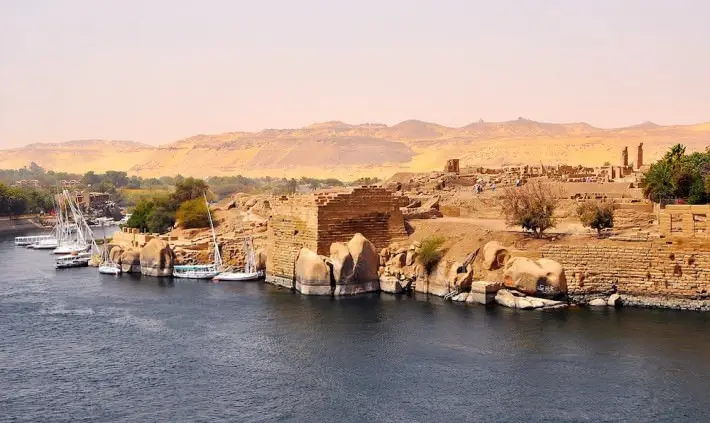
Nestled amidst the serene waters of the Nile River, Philae Temple stands as a testament to ancient Egypt’s enduring spirit. This majestic sanctuary, once threatened by the rising waters of the Aswan High Dam, was meticulously relocated to the nearby island of Agilkia.
A Sanctuary Dedicated to the Goddess Isis
With its intricate architecture and rich historical tapestry, Philae Temple offers a captivating glimpse into the religious fervor and cultural significance of ancient Egypt. Dedicated to the goddess Isis, the temple served as a pilgrimage site for devotees seeking her blessings and protection.
Exploring Philae Temple: Myths Carved in Stone
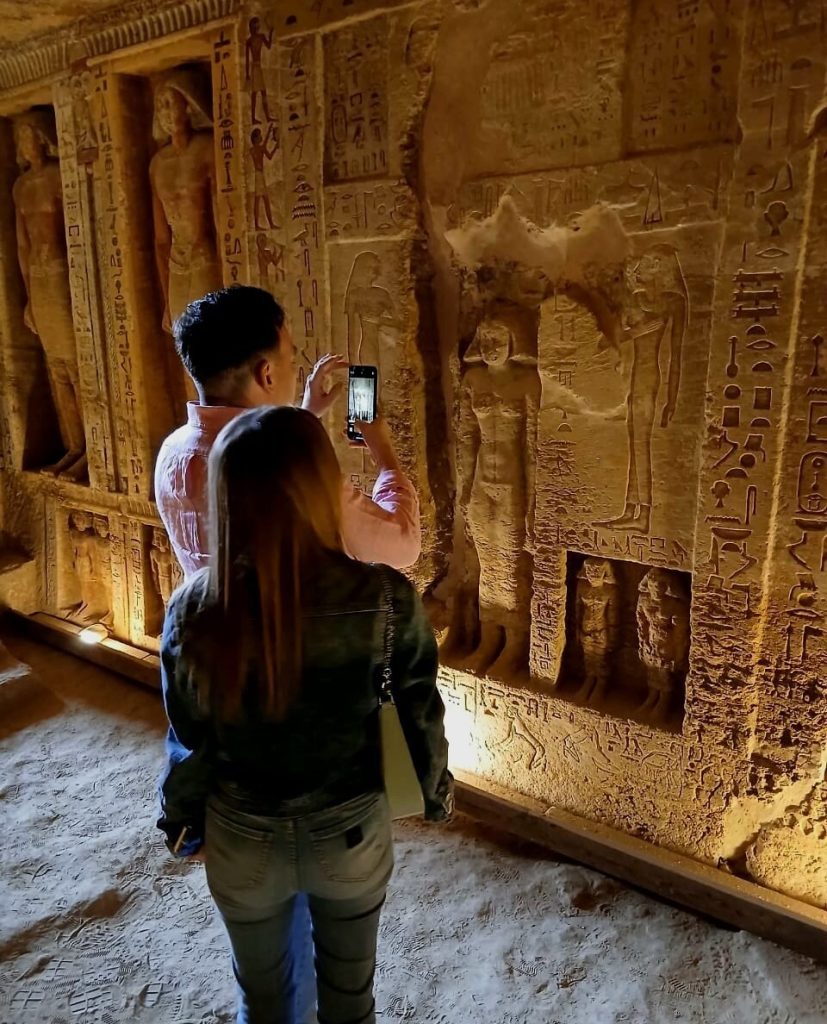
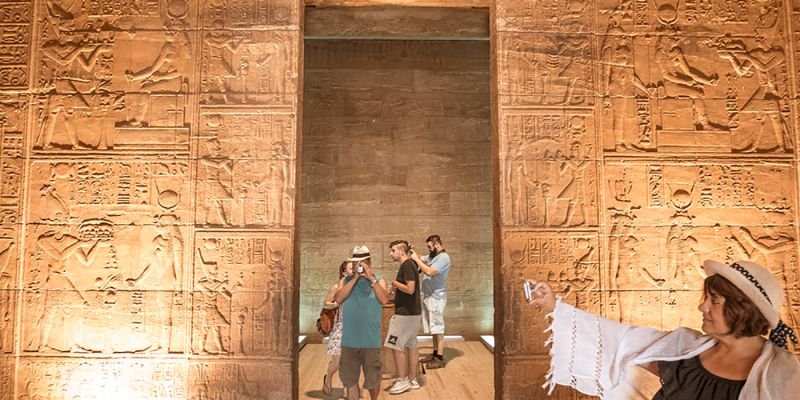
As you explore the temple’s majestic pylons, colonnaded courtyards, and sacred sanctuaries, you’ll be transported back in time to a world of myth and magic. Witness the intricate reliefs that adorn the temple walls, each one telling a story of gods and goddesses, pharaohs, and mortals.
Philae Temple: A Symbol of Preservation and Resilience
Beyond its architectural grandeur, the Philae Temple is also a symbol of human resilience. The successful relocation of the temple to Agilkia Island showcases the lengths to which people will go to preserve their cultural heritage. Today, Philae Temple continues to inspire awe and wonder, inviting visitors from around the world to experience the timeless beauty of ancient Egypt.
Exploring the Temples of Philae
Philae Temple stood as a revered religious center in ancient Egypt, drawing pilgrims devoted to the goddess Isis. The temple served as a sacred space for offerings, rituals, and seeking blessings from Isis, believed to hold the power of healing and protection.
The Temple of Isis:
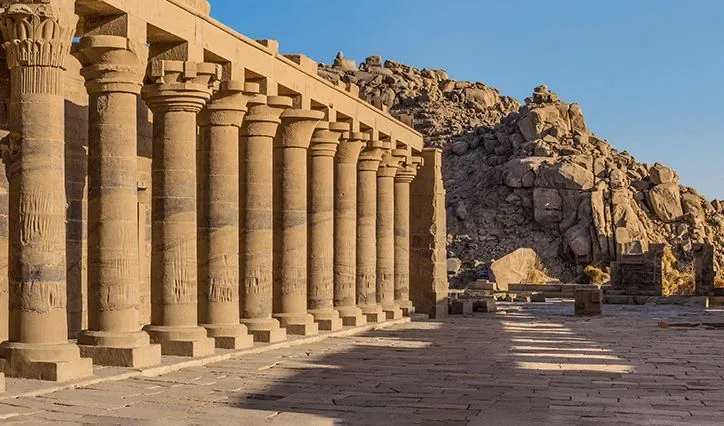
This is the largest and most important temple on the island. It is dedicated to Isis, the Egyptian goddess of motherhood, fertility, and magic. The temple is built in a traditional Egyptian style, with a series of pylons, hypostyle halls, and sanctuaries. The walls of the temple are decorated with beautiful reliefs and paintings depicting scenes from Egyptian mythology.
Temple of Hathor
This temple is dedicated to Hathor, the goddess of love, beauty, and music. It is smaller than the Temple of Isis, but it is still an impressive structure. The temple is decorated with colorful reliefs and paintings, many of which depict Hathor and her son Horus.
The Kiosk of Trajan:
This small kiosk was built by the Roman emperor Trajan in the 1st century AD. It is one of the most well-preserved monuments on the island, and it is still used today for religious ceremonies.
The Arch of Hadrian: This arch was built by the Roman emperor Hadrian in the 2nd century AD. It is a beautiful example of Roman architecture, and it is one of the most recognizable landmarks on the island.
The Pylon of Philae:
This pylon is the main entrance to the temple complex. It is decorated with hieroglyphs and scenes from Egyptian mythology.
The Philae temple complex is a UNESCO World Heritage Site. It is one of the most important and beautiful ancient Egyptian temples in existence. If you get to visit it, you won’t be let down.
Conclusion
FAQ
How to Reach Philae Temple from Aswan?
Philae Temple is accessible by boat from Aswan, providing a scenic journey along the Nile.
Why is Philae Temple Important?
Philae Temple is of paramount importance due to its historical richness, architectural brilliance, religious significance, and its successful preservation efforts in the face of the Aswan Dam threat.
Philae is best reached by private boat from Aswan, usually alongside the High Dam and the unfinished obelisk — see our all-inclusive Egypt tour packages for routes that include Aswan.