Most people arrive in Egypt with three things on the list the pyramids, a museum, and some version of the Nile. All three are worth the trip. But they take up perhaps four days of a two-week country, and the things travellers tend to remember afterwards are rarely the ones they had planned before arriving.
This is a guide to the whole range: the monuments you came for, the parts of Cairo that sit behind them, the two very different ways of getting onto the Nile, the one experience that puts you above it, and what is worth doing once you leave the river valley altogether.
What a trip to Egypt actually looks like
Egypt is long and thin. Almost everything travellers come to see sits on a narrow strip along the Nile, running roughly 700 kilometres from Cairo in the north to Abu Simbel in the south, with the Red Sea coast off to the east and desert on both sides.
That geography decides the shape of most trips. Cairo and Giza at one end, Luxor and Aswan at the other, and a choice about how you cover the gap a short flight, an overnight train, or a cruise that turns the journey itself into part of the holiday.
A week gets you Cairo and one southern city without rushing. Ten days to two weeks covers Cairo, Luxor, Aswan and either the Red Sea or a desert oasis.
The ancient sites you came for
- Giza: the pyramids and the Sphinx
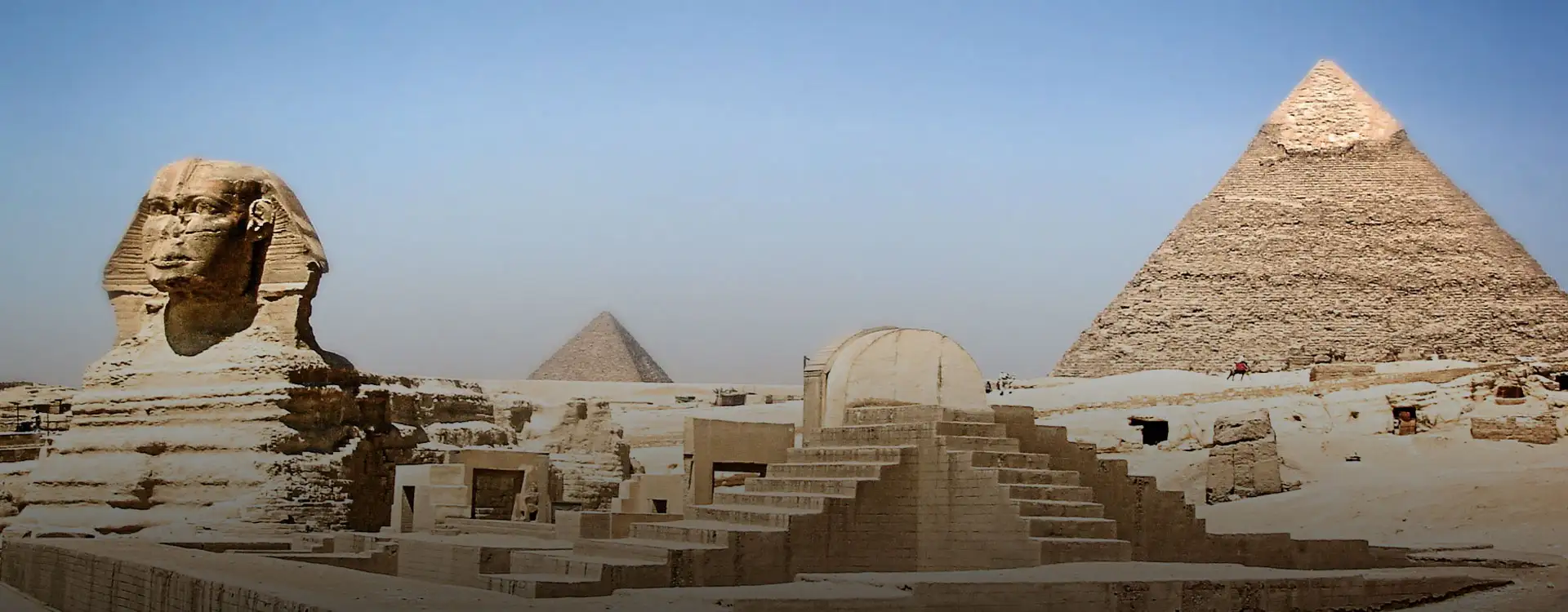
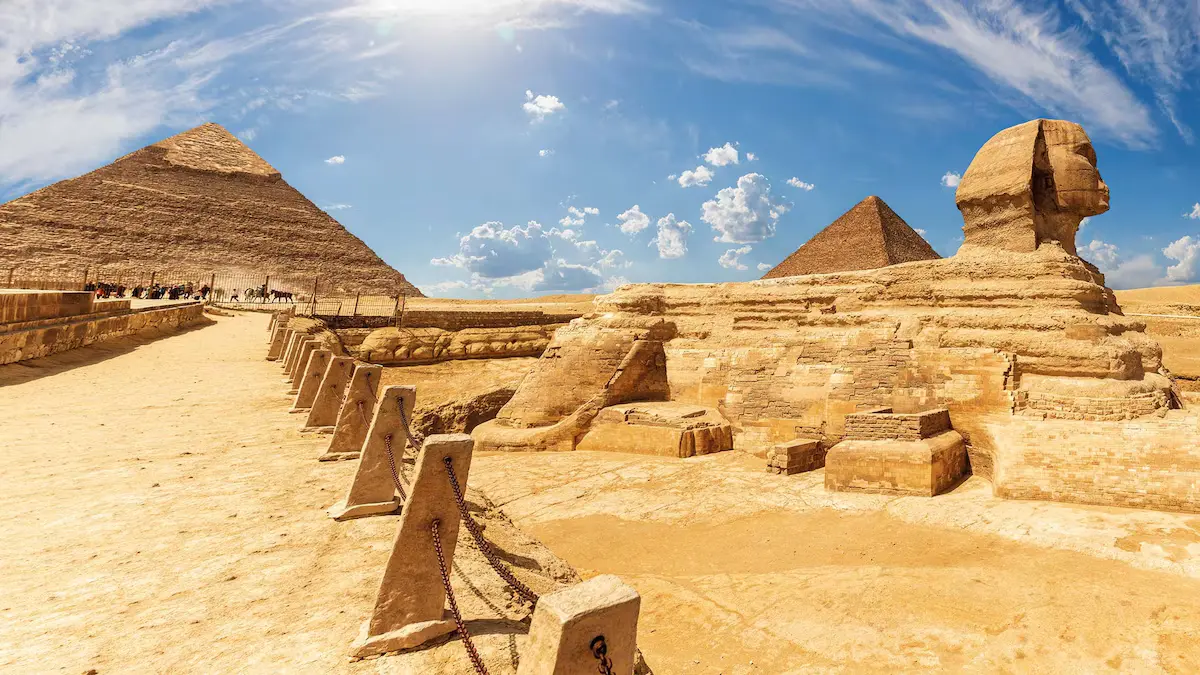
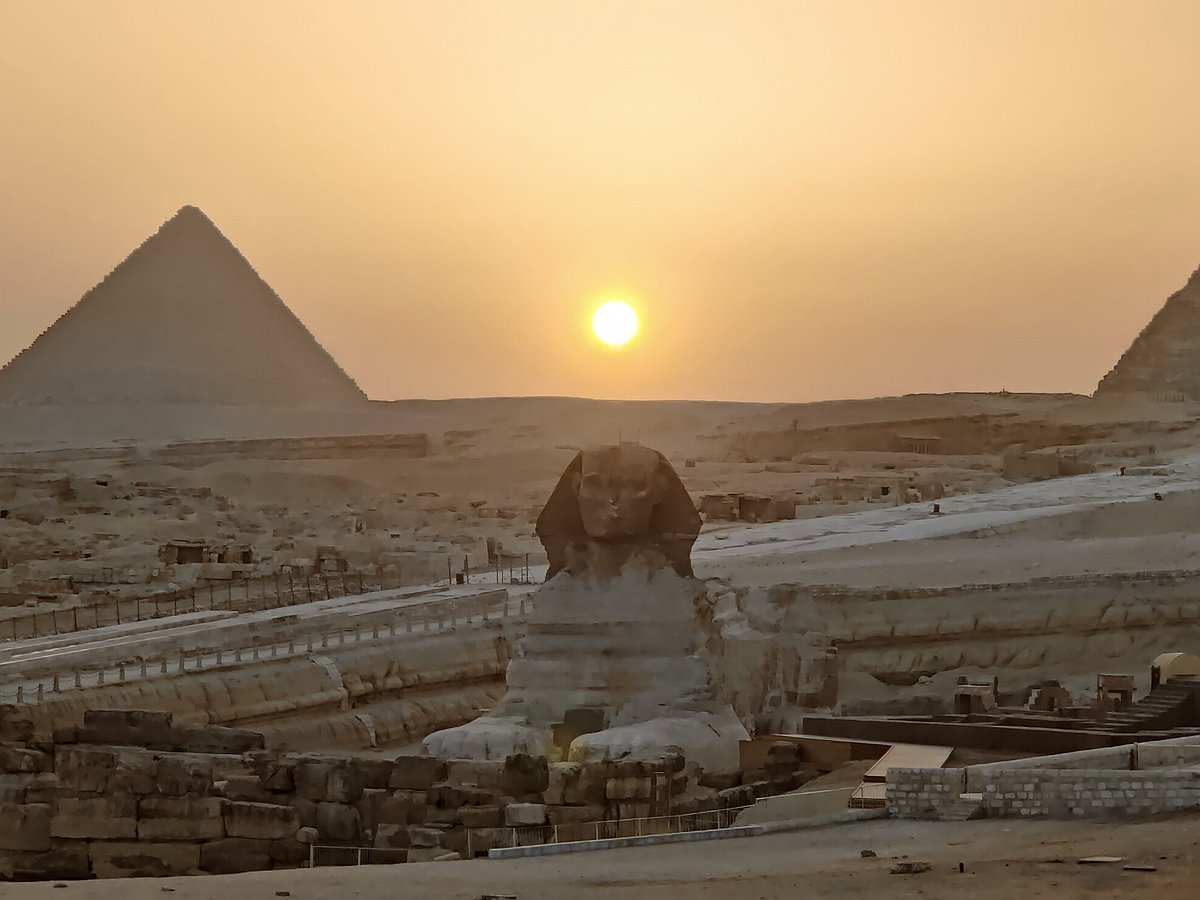
The three pyramids at Giza were built for Khufu, Khafre and Menkaure during the Fourth Dynasty, and the Great Pyramid held the record as the tallest structure made by human hands for something like four thousand years. The Sphinx sits below them on the plateau.
The plateau is busiest in the middle of the day. Early morning is cooler, quieter and better for photographs, and it is the difference between queuing and walking straight in.
- Saqqara and the step pyramid
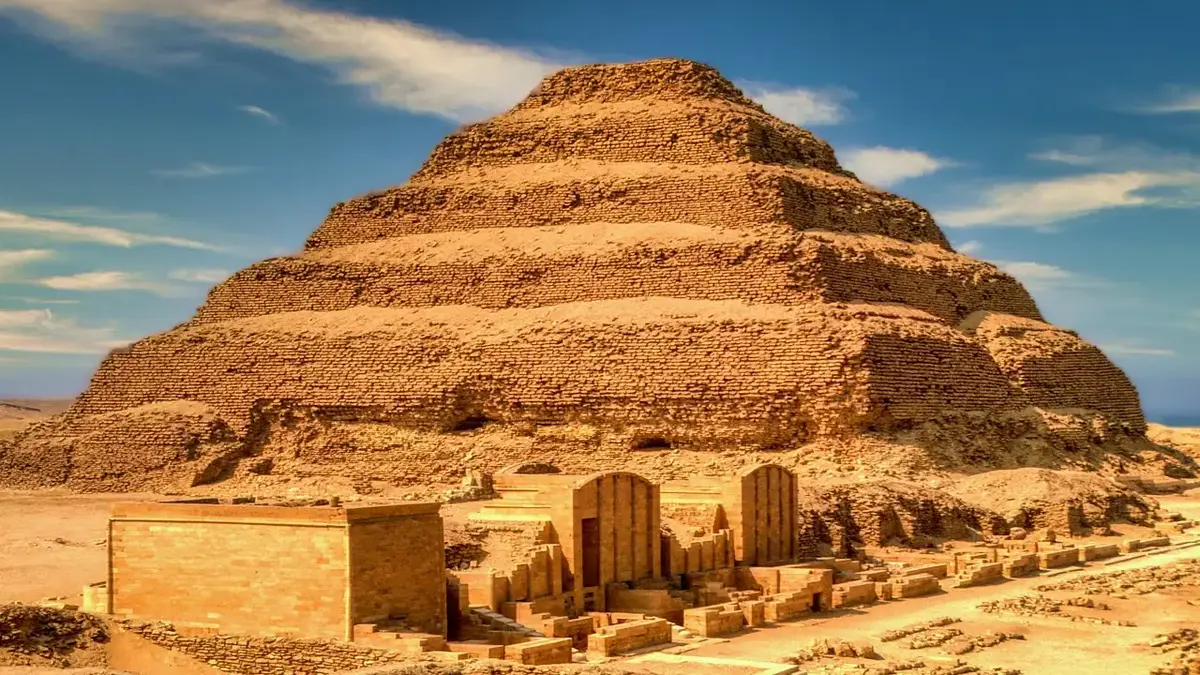
Half an hour south of Giza, Saqqara holds the Step Pyramid of Djoser older than the Giza pyramids and generally considered the first monumental stone building anywhere. The surrounding necropolis is enormous and still producing discoveries; the site has yielded significant finds in recent years, including painted tombs in remarkable condition.
Saqqara gets a fraction of Giza’s crowds for a site of comparable importance.
- Karnak and Luxor Temple
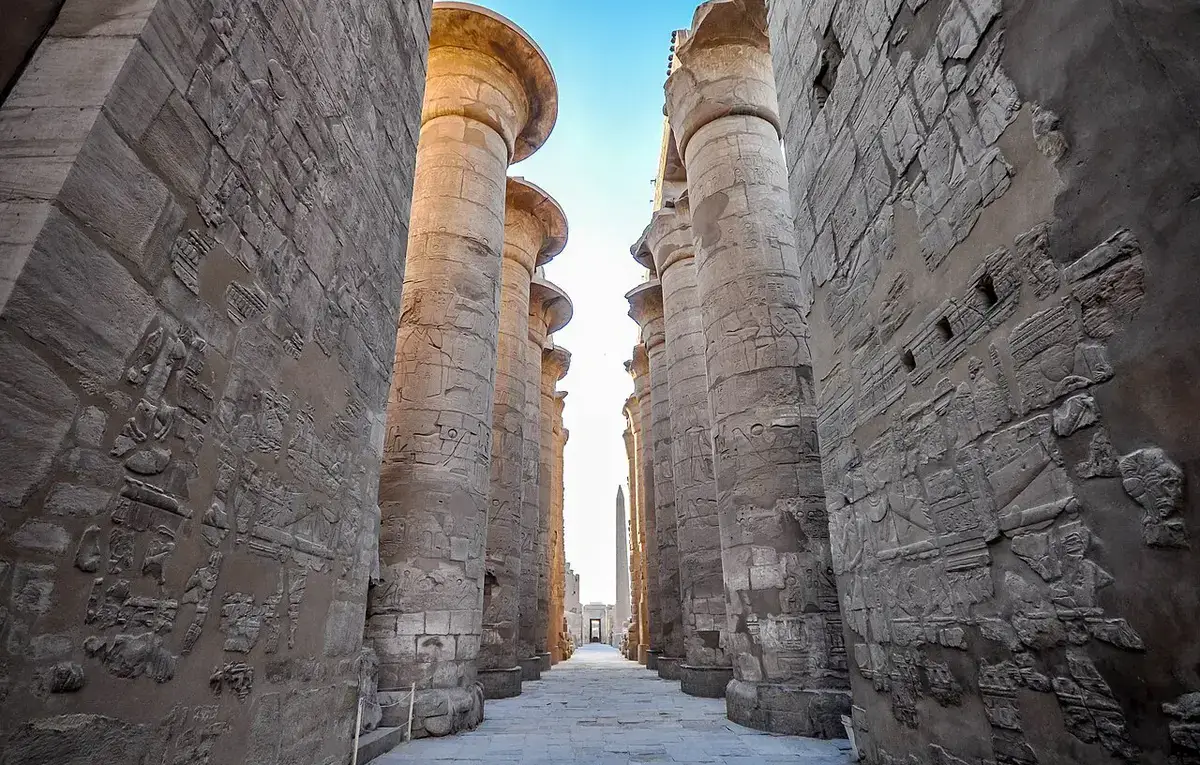
Karnak is not one temple but a complex built, extended and rebuilt across roughly two thousand years. Its Great Hypostyle Hall contains 134 columns, and standing among them is the closest thing in Egypt to being inside the scale of the ancient religion rather than looking at it.
Luxor Temple sits a couple of kilometres away in the middle of the modern town, connected to Karnak by the restored Avenue of Sphinxes. It is worth seeing after dark, when it is lit.
- The Valley of the Kings
On the west bank at Luxor, the valley holds more than sixty tombs cut into the rock, including Tutankhamun’s. The painted decoration inside the better tombs is the reason to go colour that has held for three thousand years because it sat sealed in dry rock.
Not all tombs are open at once; the rotation protects them.
- Abu Simbel
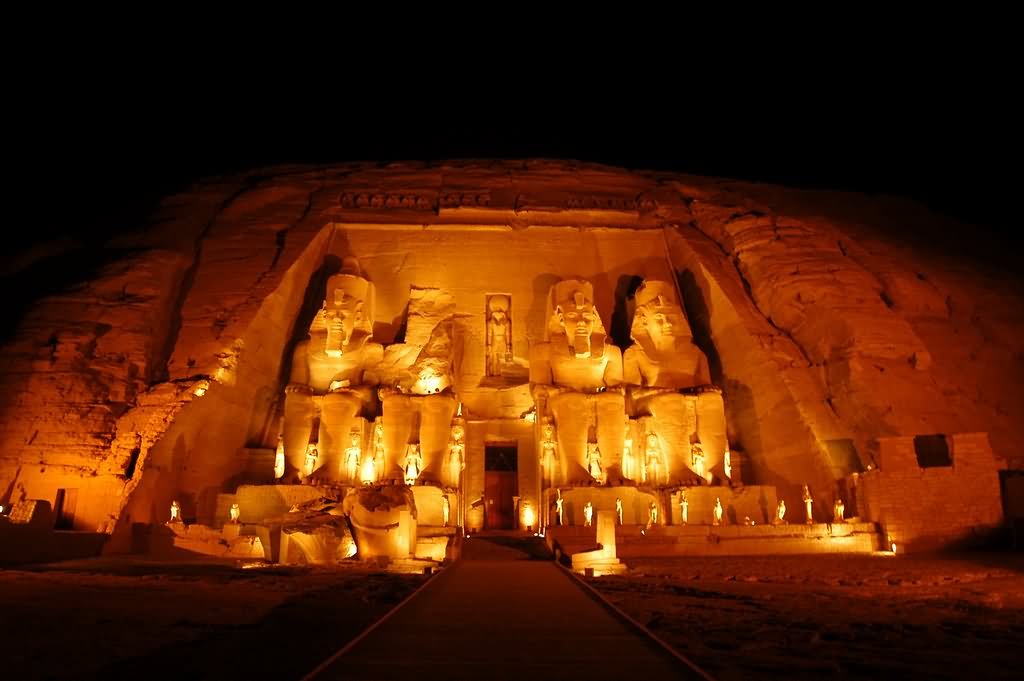
Ramesses II’s temple in the far south, with four seated colossi cut into the cliff face. The whole structure was cut apart and moved to higher ground in the 1960s when the Aswan High Dam flooded its original site an engineering project almost as remarkable as the temple.
Twice a year, on 22 February and 22 October, the rising sun reaches through the entrance and lights the statues in the inner sanctuary.
things to do in egypt beyond the museums
Cairo is a city of more than twenty million people with a thousand years of building on top of a much older foundation. The pyramids are technically in it. So is a great deal else.
- Islamic Cairo and the Khan el-Khalili
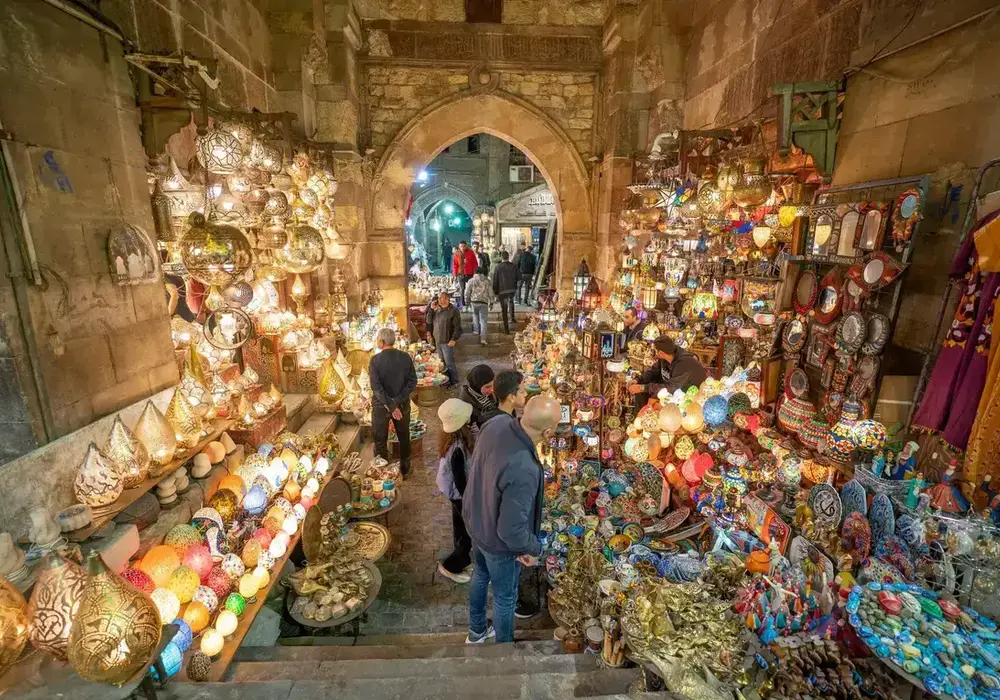
The medieval core holds one of the densest concentrations of Islamic architecture anywhere mosques, madrasas and gates spanning several centuries. The Khan el-Khalili market has been trading on roughly the same spot since the fourteenth century. Go for the streets around it as much as the stalls themselves.
- Coptic Cairo
A small, quiet quarter built into the walls of a Roman fortress, holding the Hanging Church, the Ben Ezra Synagogue and several of the oldest Christian sites in Egypt, all within a few minutes’ walk of each other.
- The Grand Egyptian Museum
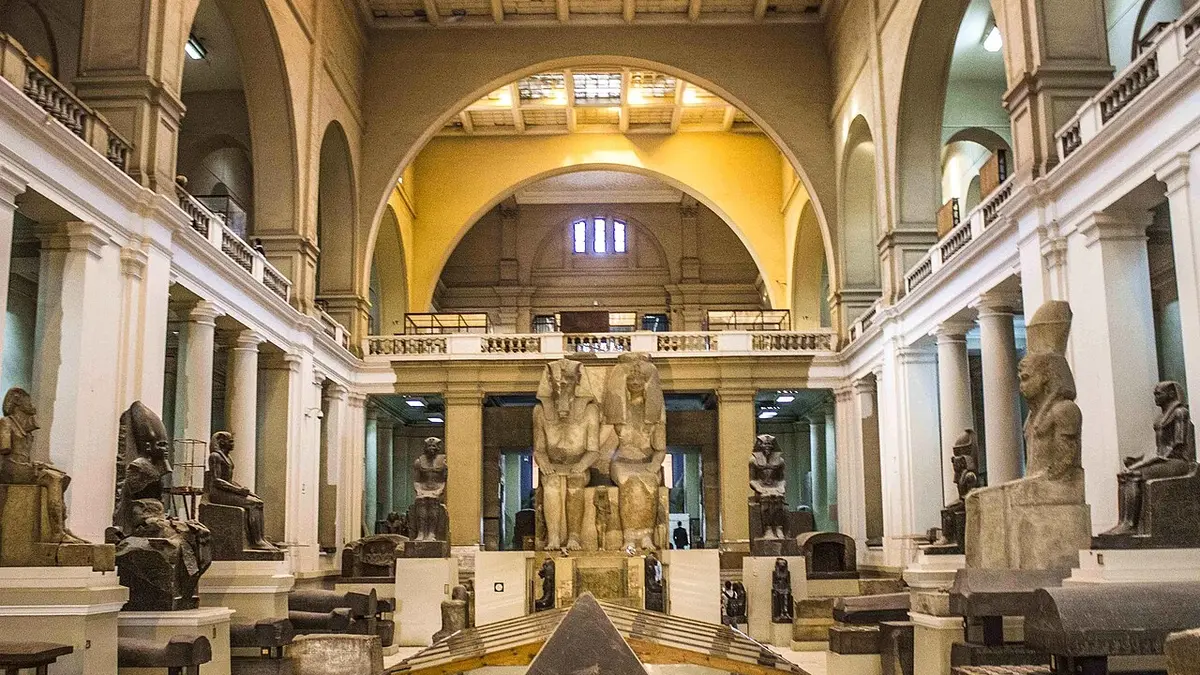
The Grand Egyptian Museum at Giza is the largest museum in the world devoted to a single civilisation, and it holds the complete Tutankhamun collection displayed together for the first time. Allow far more time than you think. It is not a two-hour building.
- Abdeen Palace and Egypt’s royal century
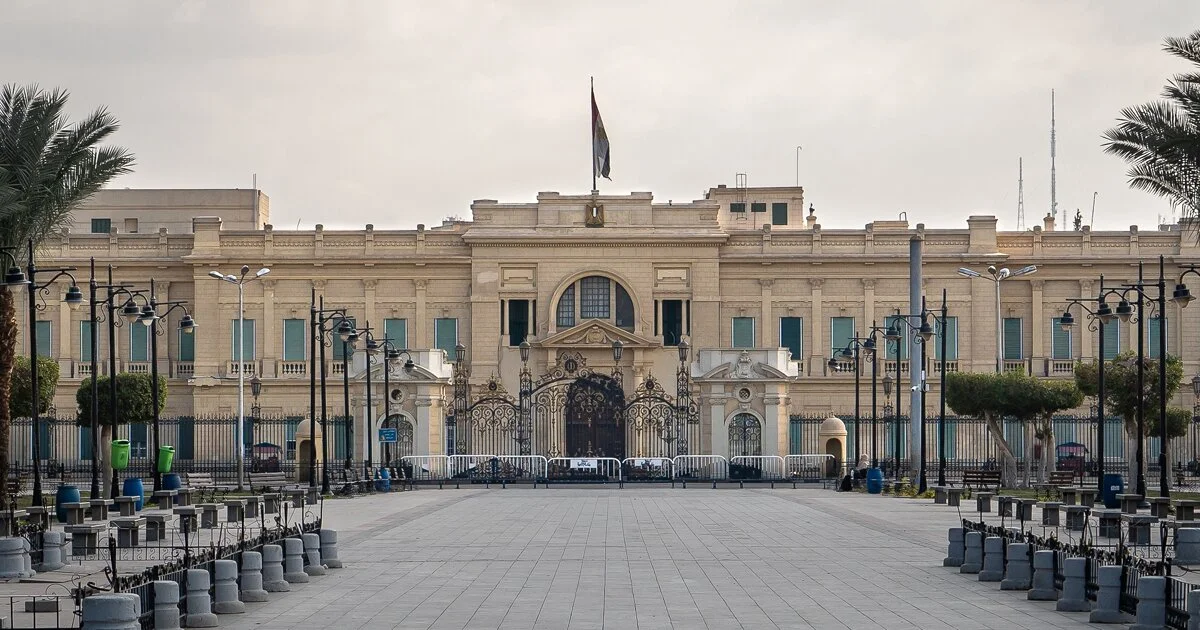
Egypt did not stop having history when the pharaohs did. Abdeen Palace was built under Khedive Ismail in the 1860s and 1870s and served as the seat of Egypt’s royal family until the monarchy ended in 1952. It is a European palace dropped into central Cairo throne hall, grand dining hall, salons, a winter garden and it belongs to a period most visitors skip entirely.
The palace is not an ordinary open museum, and the interior is not part of a standard Cairo itinerary. Entry to the royal halls requires special permission arranged in advance, which is what a private tour of Abdeen Palace is for a licensed Egyptologist, and access to rooms including the Throne Hall, the Suez Canal Hall and the Byzantine Hall.
On the water: the Nile
There are three quite different ways to be on the river, and travellers often book one assuming it is another.
- A Nile cruise between Luxor and Aswan
The standard cruise runs three or four nights between Luxor and Aswan, stopping at Edfu and Kom Ombo. It is efficient you sleep and travel at once, and the temples arrive without transfers. It is also the busiest option, with a lot of boats working the same stretch.
- A dahabiya for a slower river
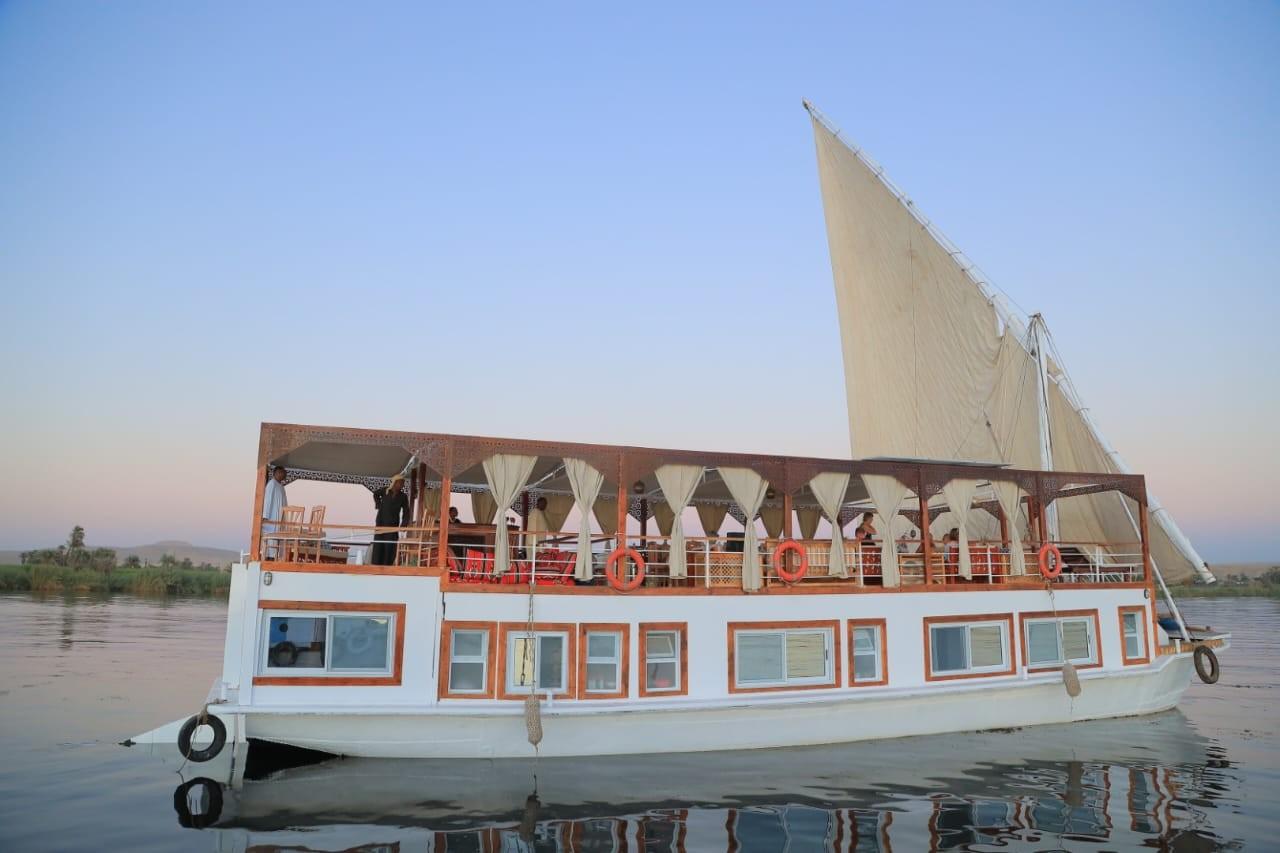
A Feddya Dahabiya is a small sailing boat, usually a handful of cabins. It moves at the pace of the wind rather than a schedule, moors at places the large boats cannot reach, and turns the same route into something much quieter.
- Sailing a felucca in Cairo
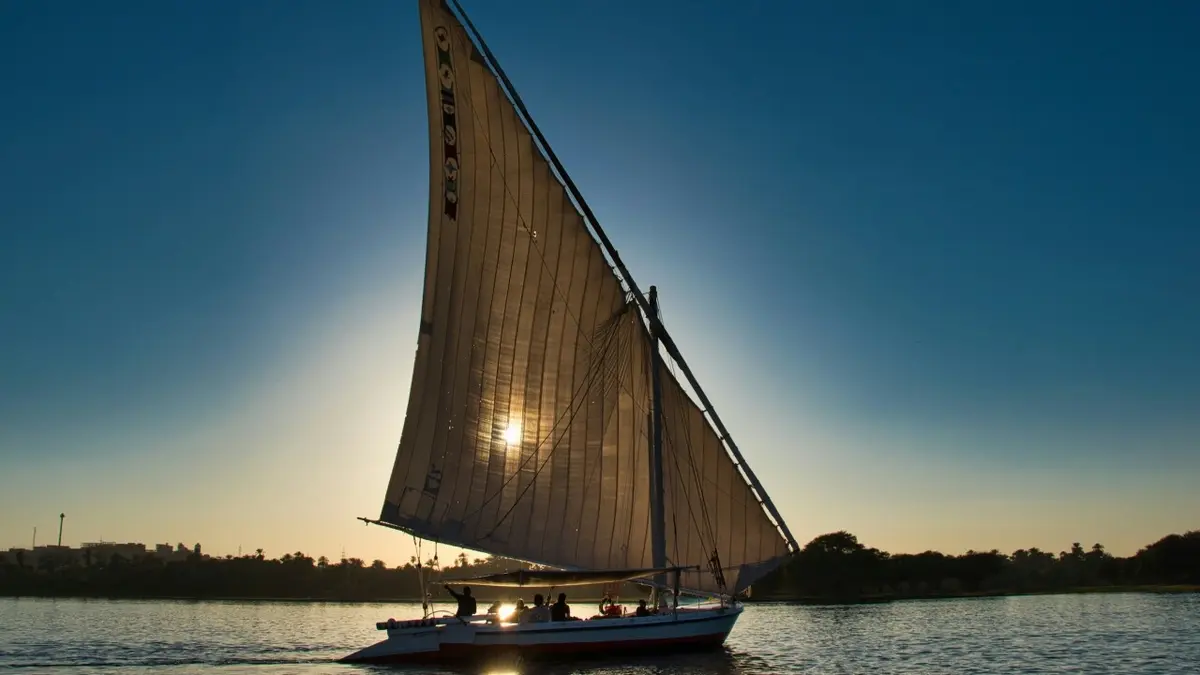
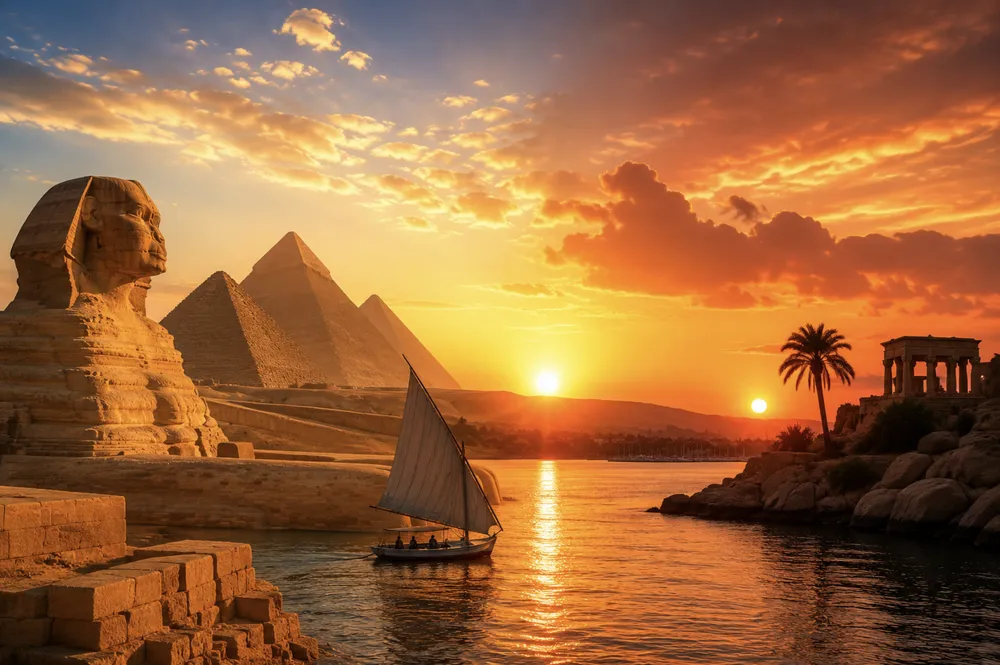
A felucca is the small wooden sailboat with the tall triangular sail you see on the river all day. No engine it works the wind and the current, which is why an evening on one is nearly silent. It is a completely different thing from a dinner boat, and the two get confused constantly; we have written up how a felucca differs from a Nile dinner cruise separately.
Feluccas in Cairo run as shared boats, which means sharing the deck. The alternative is a private felucca in Cairo the whole boat reserved, with dinner served on board and two hours of sailing.
- From the air: sunrise over Luxor
The best hour of a trip to Egypt is often the one before most people are awake. Luxor’s balloons launch at first light on the west bank, and it is among the most reliably spectacular balloon flights anywhere a good part of the reason being that the thing you fly over is the Theban necropolis. If you want the detail before you decide, what a sunrise balloon flight over Luxor is actually like covers the timing, the season and the practicalities.
- What you see from the basket
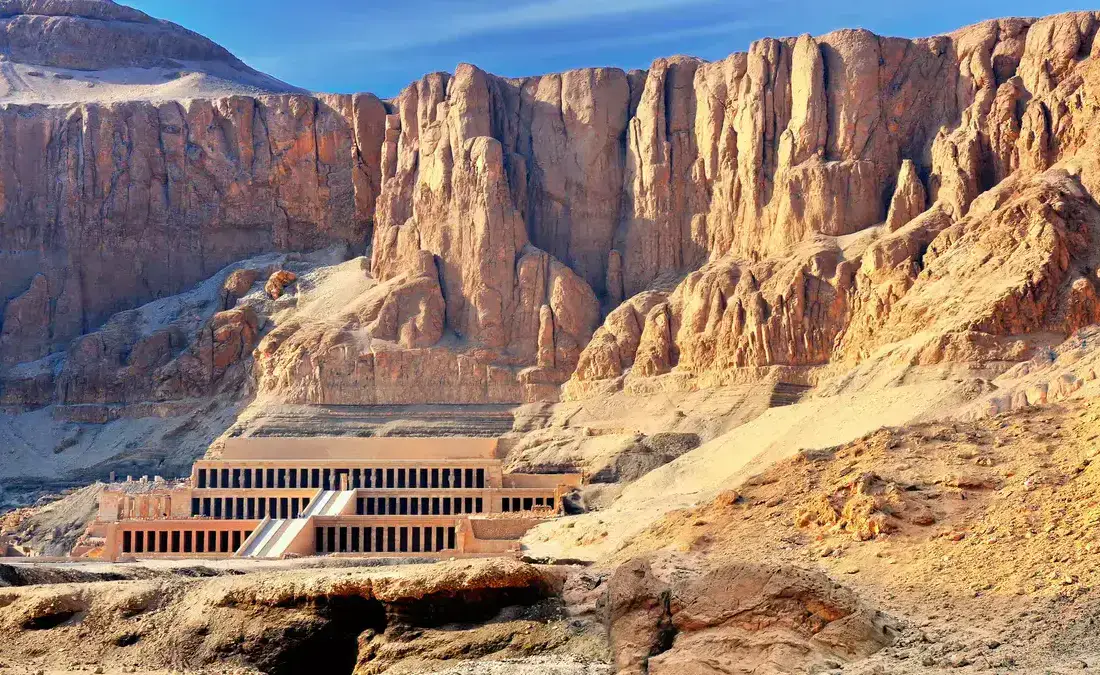
The Valley of the Kings, the Temple of Hatshepsut against its cliff, the Valley of the Queens, the Colossi of Memnon, and the line where irrigated green stops dead against desert which is the clearest possible illustration of why the whole civilisation sat where it did.
Standard flights carry a basket of eight or more. The alternative is a private sunrise balloon flight over Luxor, which is the same sky without the shared basket.
- Things to do in Luxor on the ground
Luxor is sometimes described as an open-air museum, which undersells it. Karnak, Luxor Temple, the Valley of the Kings, Hatshepsut’s terraces, the Ramesseum, Medinet Habu and the Colossi of Memnon are all within a short drive of each other, split between the east bank where the living city is and the west bank where the dead were buried.
Two full days is a realistic minimum. Three is better.
Beyond the Nile Valley
- The Red Sea
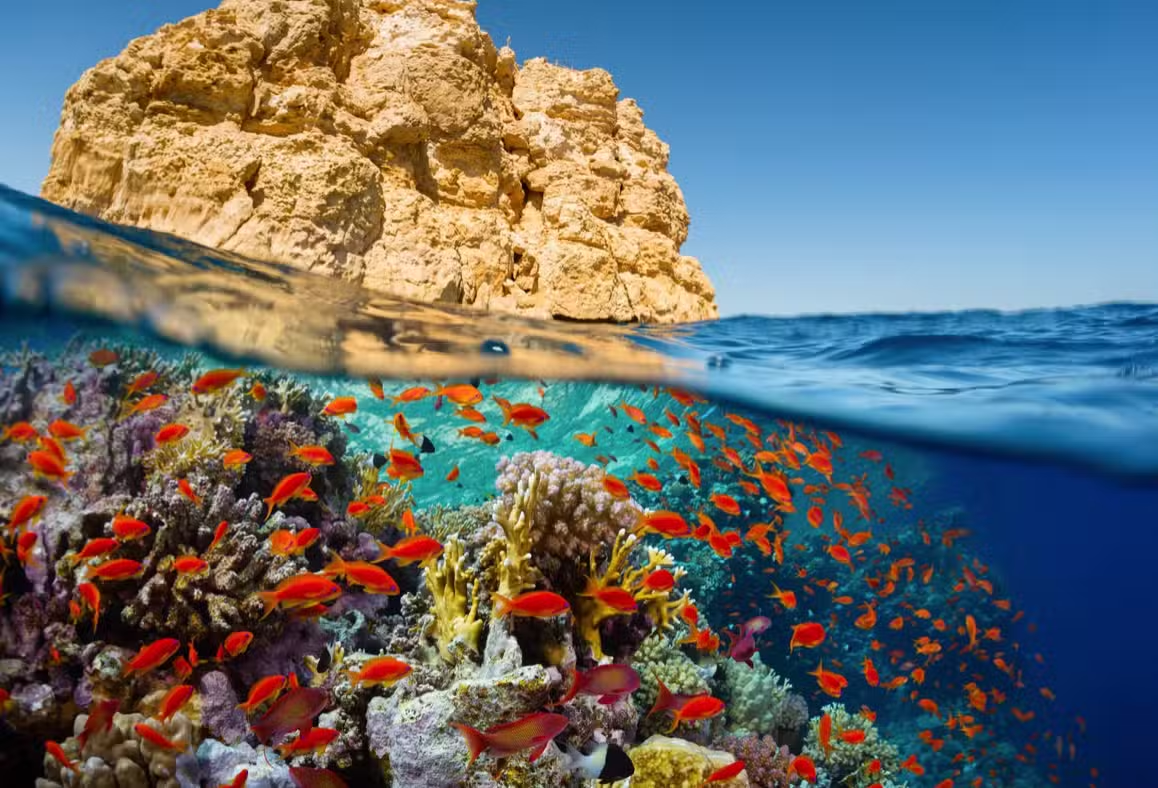
Hurghada, El Gouna, Marsa Alam and Sharm el-Sheikh sit on some of the most accessible coral reef in the world. Diving and snorkelling are the draw, and the coast works well as the decompression half of a trip that starts with temples.
- Siwa and the Western Desert
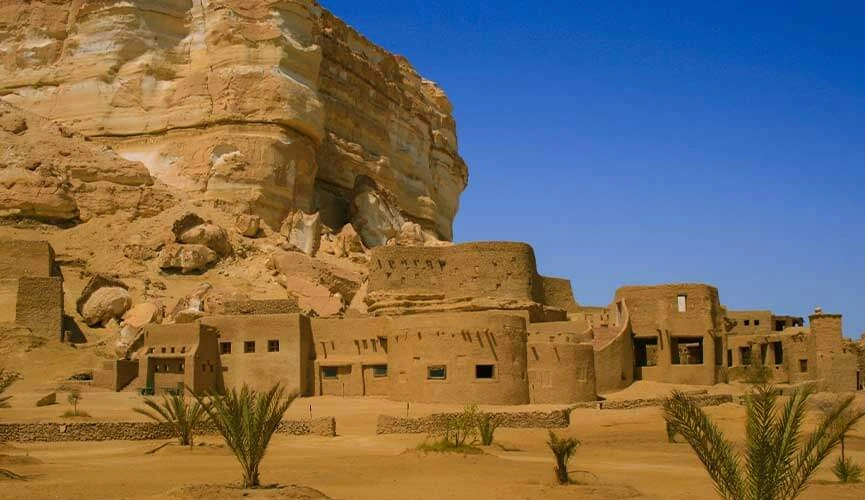
Siwa Oasis is a long way west, near the Libyan border salt lakes, palm groves, the ruins of the oracle temple Alexander is said to have consulted. Between Bahariya and Farafra, the White Desert holds wind-carved chalk formations that look like nothing else in the country.
Both need time and planning. Neither fits into a first week.
- Food, markets and Cairo after dark
Egyptian food is bread, beans, grilled meat and slow-cooked vegetables, and the national dish, koshari, costs almost nothing and is entirely carbohydrate. Eat it once from a dedicated koshari shop.
Cairo runs late. Restaurants fill after nine, the Nile bridges are busy at midnight, and the temperature in summer is simply more reasonable after dark. Plan the evenings as part of the trip rather than the gap between days.
- When to go
Egypt’s main season runs from October to April, when the heat is manageable and everything is comfortable to walk. Summer in Upper Egypt is severe. The full month-by-month picture, including how it differs between Cairo, Luxor and the Red Sea, is in our guide to the best time to visit Egypt.
- How long you need
| Trip length |
Realistic coverage |
| 4–5 days | Cairo and Giza, with Saqqara |
| 7 days | Cairo plus Luxor, or Cairo plus a short cruise |
| 10 days | Cairo, Luxor, Aswan, and the sites between them |
| 14 days | The above plus the Red Sea or a desert oasis |
Egypt punishes over-scheduling. Transfers take longer than they look on a map, and the sites themselves are physically large. Building in fewer things and seeing them properly is almost always the better trade which is the logic behind most of our VIP day tours.
Practical notes before you travel
- Visas. Most nationalities need one. Check the current requirement for your passport before booking, as the rules do change.
- Dress. Modest clothing is expected at religious sites covered shoulders and knees, and a scarf for women entering mosques.
- Sun. Even in winter, the middle of the day on an exposed site is punishing. Hat, water, and a long-sleeved layer.
- Shoes. Every major site involves uneven stone and a lot of walking.
- Tipping. Small tips are customary and expected in many situations. Carry small notes.
Turning Your Egypt Travel List Into a Trip
Everything above is a list. The itinerary is the harder part: deciding what actually fits into the days you have, what to see at first light before the coaches arrive, and which experiences need to be arranged weeks in advance rather than on the morning of your visit.
That is the part we handle.
VIP Egypt Tours is operated by Travel Lovers Egypt, licensed by the Egyptian Travel Agents Association, E.T.A.A. No. 2390. We arrange private experiences across Cairo, Luxor, and Aswan, building each itinerary around what you want to see and experience rather than a fixed departure time or a full coach.
Here are three private experiences to start with:
- A Private Felucca in Cairo — Reserve the entire boat for your group, spend two hours sailing along the Nile, and enjoy dinner served on board.
- A Private Tour of Abdeen Palace — Explore the royal halls by advance permission with a licensed Egyptologist who can bring the palace’s history to life.
- A Private Sunrise Balloon Flight Over Luxor — See the Theban Necropolis at first light from a private balloon reserved exclusively for your group.
Tell us your travel dates and what you want to experience in Egypt, and we’ll create a private itinerary around your interests.
Follow Along
We share the parts of Egypt that do not always fit into a traditional travel guide: ancient sites, fascinating history, and what these experiences actually look like on the day.
Instagram · Facebook · YouTube
FAQ
- What is the number one thing to do in Egypt?
The Giza pyramid complex, if you only do one. But the experiences travellers describe most vividly afterwards tend to be the balloon flight over Luxor at sunrise and the evenings on the Nile the ones with no queue attached.
- How many days do you need in Egypt?
Seven days covers Cairo and one southern city properly. Ten to fourteen covers the country’s main sites without a rushed schedule.
- Is Egypt suitable for a first-time visitor travelling independently?
It is manageable, but the sites are large, the transfers are long and the ticketing is inconsistent. Most first-time visitors get more out of the trip with a licensed guide, which also settles the practical questions before they become problems.
- What is there to do in Egypt other than the pyramids?
A great deal Luxor’s temples and tombs, Abu Simbel, Islamic and Coptic Cairo, Abdeen Palace, the Red Sea reefs, the Western Desert oases, and both the sailing and the ballooning described above.