The Sekhmet Karnak Temple chapel is not a separate temple. It is a small chapel inside the Temple of Ptah, in the north of the Amun precinct at Karnak.
- Ticket: inside the Karnak complex, so no separate site ticket
- Finding it: north of the main visitor route, easy to walk past
- Opening: the chapel itself is not always open, and access is managed
- Inside: one standing granite statue, one slot of daylight, nothing else
It is a chapel, not a temple of its own
The phrase “Sekhmet Karnak temple” covers a small chapel rather than a standalone building, and getting that clear before you arrive saves confusion on the ground. Sekhmet does not have her own temple at Karnak in the way Amun, Mut and Khonsu do. She has a chapel, and that chapel sits inside somebody else’s temple.
What visitors call the Sekhmet Karnak temple is in fact the Temple of Ptah. Sekhmet is there because of who she was married to: at Memphis she formed a triad with Ptah and their son Nefertum, and where Ptah was worshipped, she belonged.
The Temple of Ptah
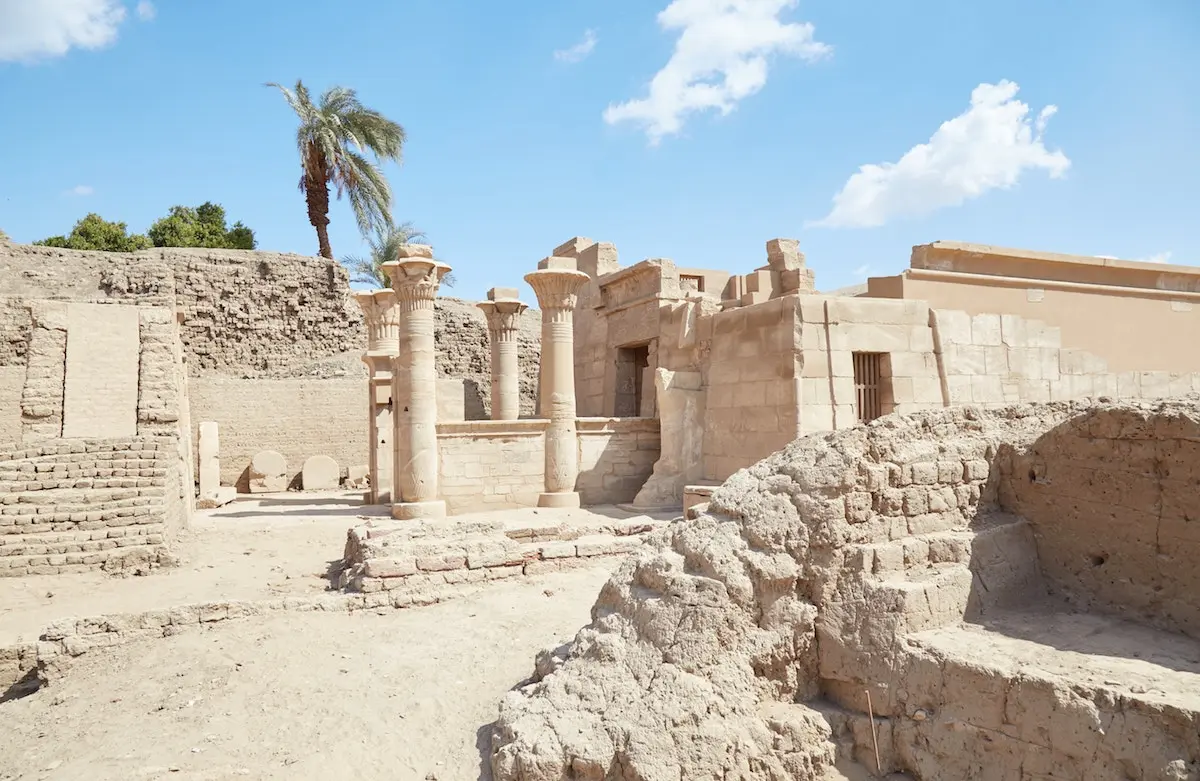
The Temple of Ptah is modest, and next to the Amun temple it is very modest indeed. It was begun under Thutmose III in the fifteenth century BC and extended by later rulers, with work continuing into the Ptolemaic period, which is why the gateways along its short axis do not all look like they belong to the same century.
The plan is simple: a run of small gateways leading east to west, then a set of chapels at the back. Sekhmet has one of them.
You can see how it sits within the wider complex on the Digital Karnak project at UC Santa Cruz, which maps Karnak’s structures and building phases.
Where it is and how to find it
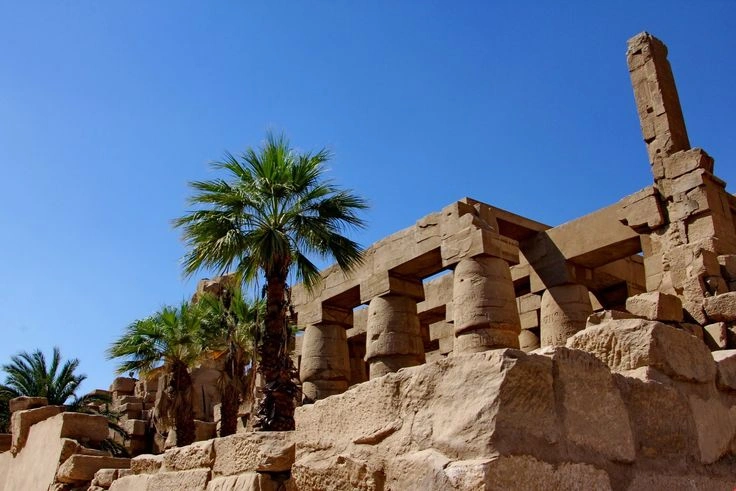
Almost everyone walks the same line through Karnak: in at the first pylon, across the great court, through the Hypostyle Hall, down to the sacred lake, and out. That route never goes near the Temple of Ptah.
The Ptah temple lies to the north, close to the northern enclosure wall of the Amun precinct. It is a short walk from the main axis, it is not signposted in a way you would notice at speed, and the overwhelming majority of visitors to Karnak never see it.
That is the practical reason this chapel is quiet when the rest of Karnak is not.
What is inside
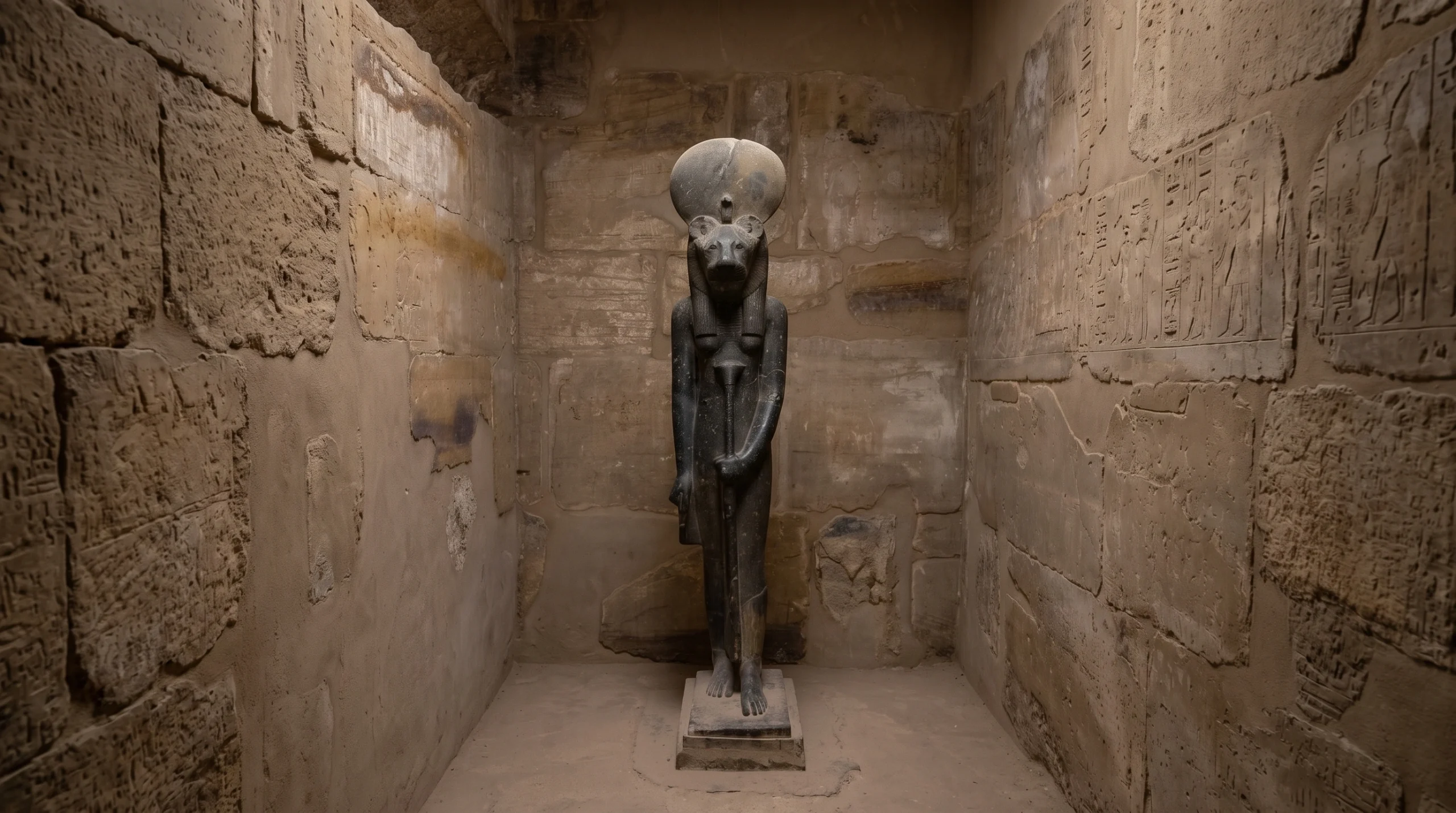
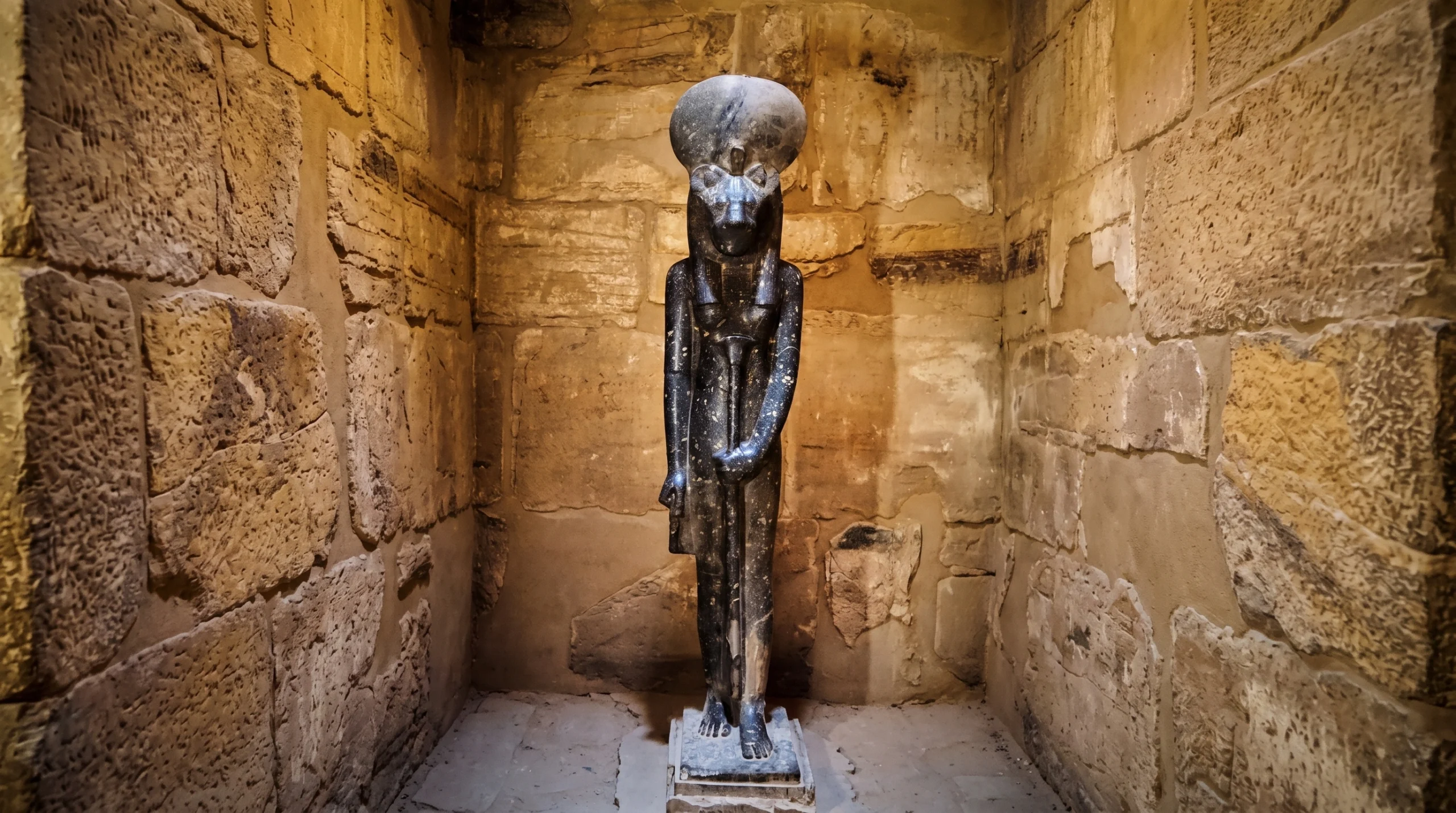
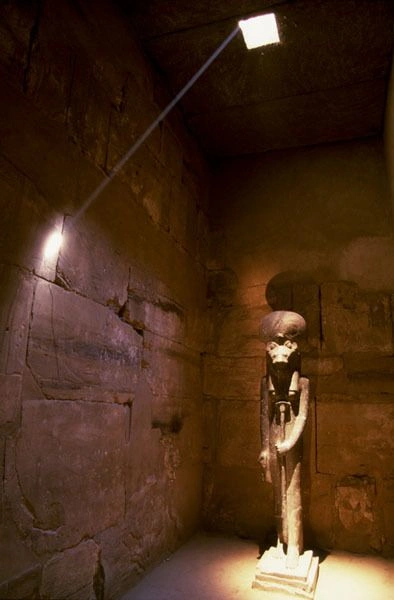
One room, and one statue.
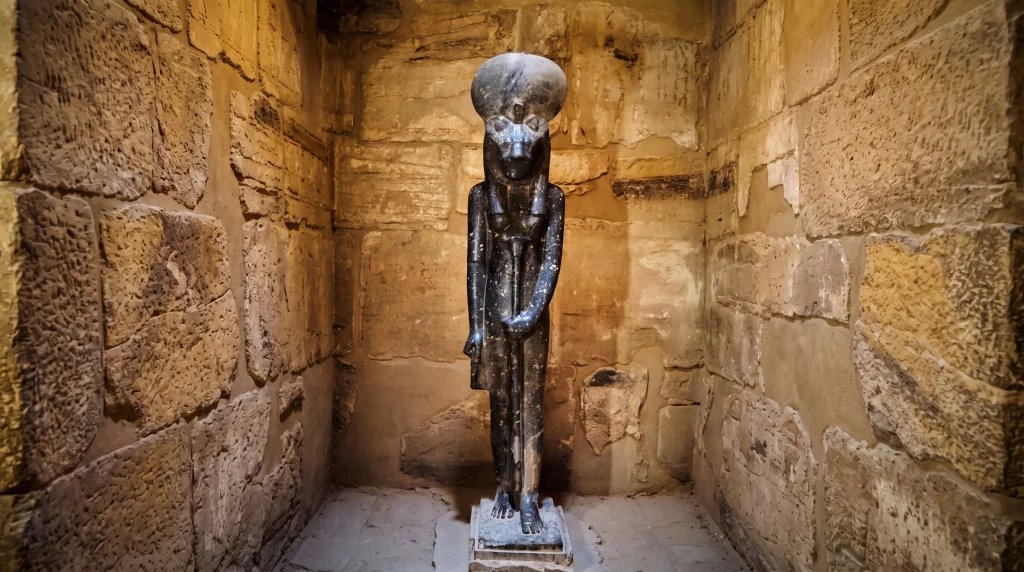
Sekhmet stands in dark granite, slightly over life size, with a sun disc above her lioness head and an ankh in one hand. There are no windows. A narrow slot cut in the roof is the only source of light, and for part of the day it drops a shaft directly onto her.
That is the whole experience, and the restraint is the point. You come in from hard sunlight, your eyes adjust, and a black lioness appears out of the dark. Detail on the carving, the stone and why so many versions of her exist is in our article on the Sekhmet statue Karnak.
The statue has never been relocated. It stands in the chapel built to hold it, which is unusual enough to be the reason people make the detour.
How access works
The Temple of Ptah is within the Karnak enclosure, so your Karnak ticket covers the ground. The chapel is a different matter. It is not reliably open, and when it is open, entry is managed rather than free flowing.
The reason is physical. It is a small dark room containing a single irreplaceable object. Four people at a time is comfortable; a tour group is not.
Current site information and opening arrangements are published by the Ministry of Tourism and Antiquities on its official monuments portal. Anything you read elsewhere about opening hours should be checked against it, because these arrangements change.
For a visit that does not depend on finding the chapel open on the day, our private Sekhmet Chapel tour arranges access with a licensed Egyptologist, with time inside rather than a glance from the doorway.
What to combine it with
The chapel takes a short time. The sensible thing is to fold it into the wider east bank rather than treat it as a trip in itself.
Karnak and Luxor Temple sit at opposite ends of the restored Avenue of Sphinxes, and Luxor Temple is particularly worth seeing after dark. Across the river, the Temple of Hatshepsut has its own chapel to a lion goddess, which makes an interesting comparison if Sekhmet is what brought you.
Karnak forms part of the UNESCO World Heritage site of Ancient Thebes with its Necropolis. The background on the goddess herself is in our guide to Sekhmet Karnak Temple.
Frequently asked questions about the Sekhmet Karnak temple chapel
Is there a Sekhmet Karnak Temple?
Not a temple of her own. Sekhmet has a chapel inside the Temple of Ptah, a small temple in the north of the Amun precinct.
Do you need a separate ticket for the Sekhmet chapel?
The Temple of Ptah is inside the Karnak enclosure, so the ground is covered by your Karnak ticket. Entry into the chapel itself is managed separately and is not always available.
Where is the Temple of Ptah at Karnak?
North of the main visitor route, near the northern enclosure wall of the Amun precinct. It is a short walk from the main axis and most visitors never go that way.
Is the Sekhmet chapel always open?
No. Opening is variable and access is managed when it is open, because the chapel is a small dark room holding a single statue.
How long does a visit take?
The chapel itself is a short visit. It is usually combined with the rest of Karnak rather than visited on its own.
Why is Sekhmet in the Temple of Ptah?
Because of the Memphite triad. Sekhmet was the consort of Ptah and mother of Nefertum, so a temple of Ptah is where she belongs.
Who built the Temple of Ptah at Karnak?
It was begun under Thutmose III and extended by later rulers, with building work continuing into the Ptolemaic period.
Getting inside
Karnak is enormous and most of it is designed to impress at scale. Pylons you cannot photograph in one frame, columns you cannot get your arms around, a hall built to make a person feel small. The Sekhmet chapel works the other way: one small room, one statue, and no crowd.
The practical problem is that the two things you need do not always line up. The walk is short and the chapel is quiet, but it is not reliably open, and turning up hoping is how most people miss it. Arranging the visit in advance is the difference between standing in front of her and reading about it afterwards.
It is ten minutes from the Hypostyle Hall, and the Sekhmet Karnak temple chapel is the part of Karnak people describe when they get home.
Plan your visit with us
VIP Egypt Tours is operated by Travel Lovers Egypt, licensed by the Egyptian Travel Agents Association, E.T.A.A. No. 2390. We arrange private access to the Sekhmet chapel with a licensed Egyptologist, so the visit does not depend on finding the door open on the day.
Read our guide to Sekhmet at Karnak for the background, the Sekhmet statue at Karnak for the object itself, and the Sekhmet Karnak story for the myth that explains why the room is dark.
Plan your VIP vacation, or tell us when you are in Luxor and we will arrange the chapel around the rest of your day.
Follow VIP Egypt Tours
We post the parts of Egypt that do not fit in a guide like this: special access visits, what the sites look like on the day, and the history behind them.