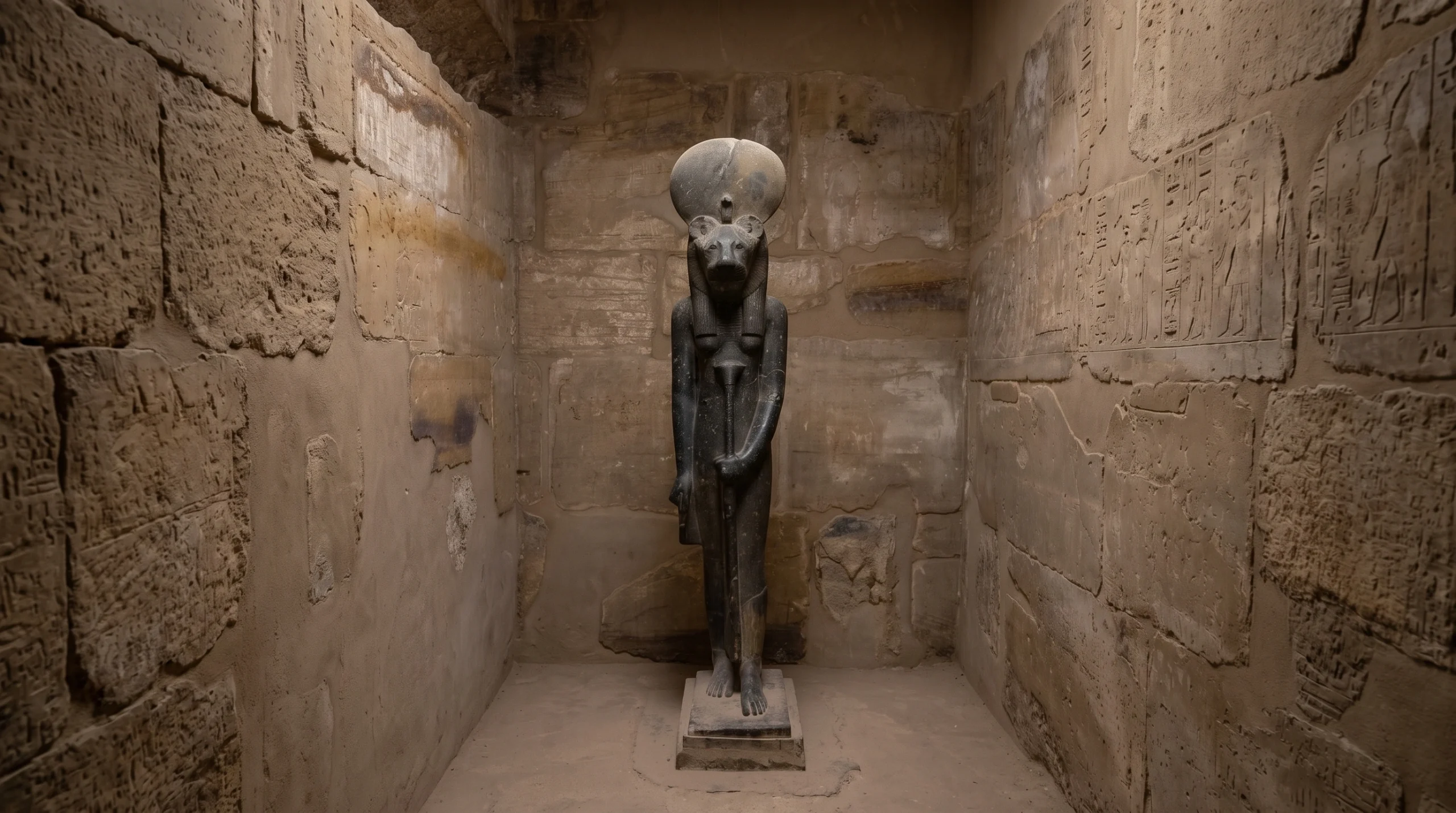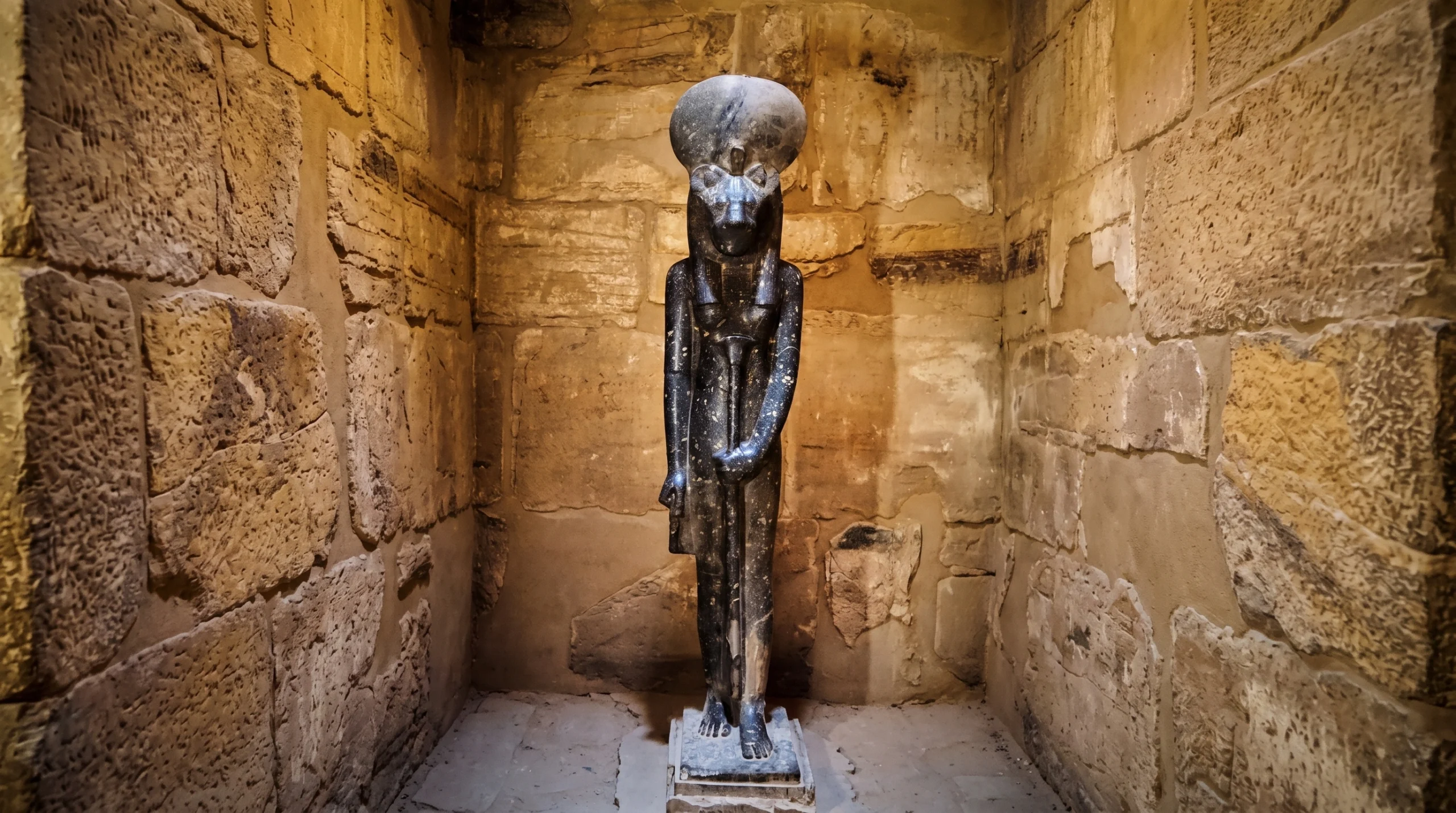
The Sekhmet statue Karnak visitors come to see is a standing figure in dark granite, a little over life size, inside a windowless chapel in the Temple of Ptah.
- Form: woman’s body, lioness head, sun disc above, ankh in one hand
- Stone: hard dark granite, quarried far to the south
- Light: a narrow slot in the roof, nothing else
- Unusual because: it is still in its own chapel, not in a museum
What the statue looks like
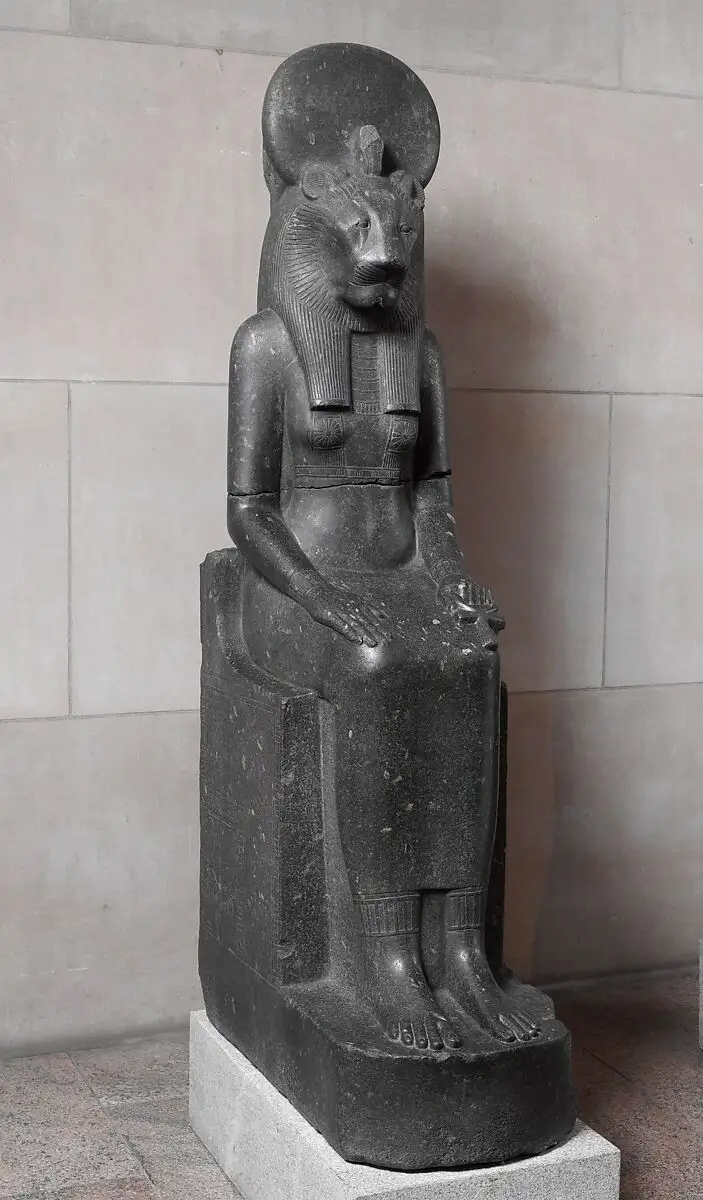
She stands, which is worth noting immediately, because a great many Sekhmet Statue Karnak are seated. The body is a woman’s, upright and formal, one foot advanced in the standard Egyptian striding pose. The head is a lioness, modelled closely enough that you can read the muzzle and the set of the ears.
Above the head sits a sun disc, marking her as a daughter of Ra. One hand holds an ankh, the sign for life, which on a goddess of plague is not a contradiction so much as a statement of the deal being offered.
She is slightly over life size. Big enough to look at you, not so big that she becomes architecture. In a room this small that proportion does most of the work.
The stone, and why it matters
The Sekhmet statue Karnak is carved from hard dark granite, the stone Egyptian sculptors reserved for things meant to last. It is difficult to work. Softer limestone can be cut quickly and repaired; granite has to be pounded, ground and polished, and a mistake cannot be undone.
Choosing it was a statement about permanence, and about the goddess. Sekhmet is not a deity you render in something that weathers.
The surface is worn smooth in places, in the way stone gets when a very large number of people have touched the same spots over a very long time. That polish is not damage. It is a record of what people have done in this room for three thousand years, and it is one of the few places in Egypt where you can see devotion physically written into an object.
The light in the chapel
The chapel has no windows. A narrow slot in the roof is the only opening, and for part of the day a shaft of daylight comes through it and falls on the statue.
The effect is not subtle and it was not meant to be. You step from bright Egyptian sunshine into a dark stone room, your eyes take a moment, and then a black lioness resolves out of the gloom with light on her face. People go quiet. It is the single most common reaction guides report, and the photographs genuinely do not carry it.
Why standing in place changes it
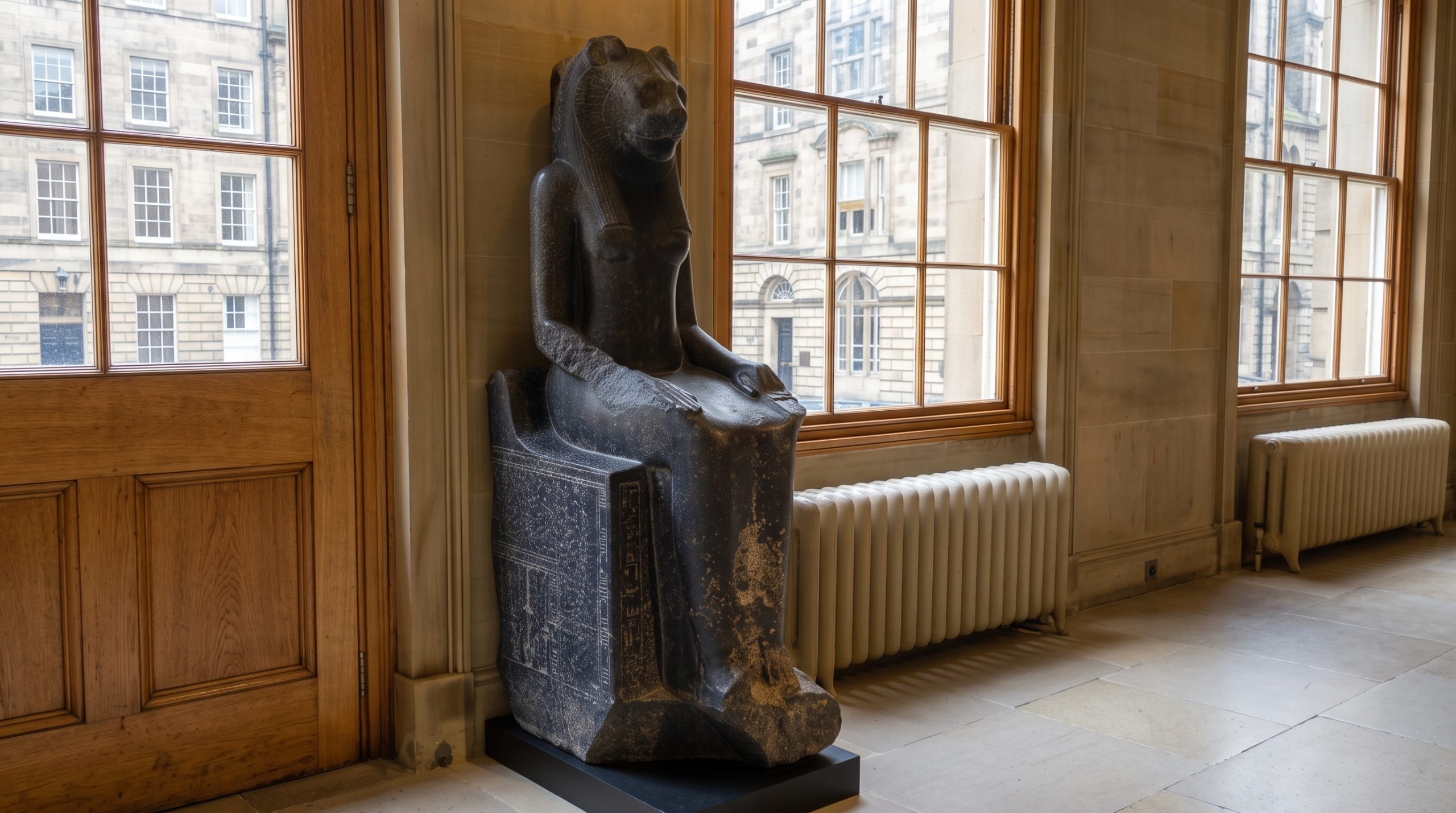
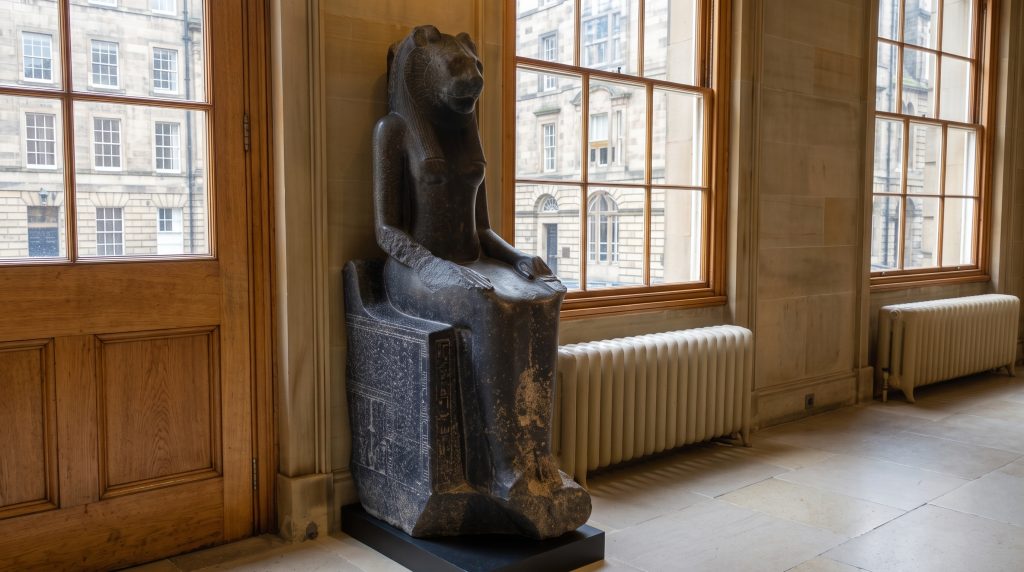
Almost every famous Egyptian statue you will see has been relocated. Into the Egyptian Museum, into the Grand Egyptian Museum, into the Louvre or the British Museum, onto a plinth in a courtyard with directional lighting and a label.
Museums do this for good reasons and they do it well. But something is lost. A statue designed for a dark chapel, seen at eye level, in the dimensions the architect intended, is a different object from the same statue under gallery lights.
The Sekhmet at Karnak was not moved. The room, the darkness, the slot in the roof and the figure were designed together, and they are still together. That is the reason to make the detour, and it is why our guide to the Sekhmet chapel at Karnak Temple spends as long on the building as on what is inside it.
The hundreds of other Sekhmets
Sekhmet is the most reproduced deity in Egyptian sculpture. In the fourteenth century BC, Amenhotep III commissioned an extraordinary series of her statues, divided between his mortuary temple on the west bank at Thebes and the precinct of Mut here at Karnak.
The count is disputed. Estimates run into the hundreds, and figures above seven hundred appear regularly in the literature. Whatever the exact number, no other Egyptian deity received anything comparable.
The explanation most often given is a ritual calendar: a statue for each day of the year, or for each day and night, so that the daily rites of appeasing her never stopped. It is a plausible reading of a pattern rather than a fact recorded by the Egyptians themselves, and an honest guide will tell you so. The Digital Karnak project at UC Santa Cruz is a good place to see how the Mut precinct is laid out.
Why Amenhotep III needed so much appeasing is the interesting question, and the answer lies in the myth. That is covered in the Sekhmet Karnak story.
Where the rest of them went
Many of Amenhotep III’s Sekhmets left Egypt in the nineteenth century, during the period when European museums were assembling Egyptian collections on a large scale. You will find them in London, Paris, Turin, Berlin, Boston, New York and a long list of smaller institutions. If you have seen a seated black lioness in a museum anywhere in the world, there is a fair chance it began at Thebes.
A substantial number remain in the Mut precinct at Karnak, sitting in rows in the open air. They are weathered, many are damaged, and seeing several dozen of them at once gives you a sense of the original scale that no single gallery piece can.
Seeing the statue
The Temple of Ptah is inside the Karnak complex and needs no separate site ticket, but the Sekhmet chapel is not always open, and access is managed when it is. A dark room with one statue does not accommodate a crowd.
Our private Sekhmet Chapel tour arranges access with a licensed Egyptologist and time inside rather than a look through a doorway. For the full background on the goddess, start with our guide to Sekhmet Karnak.
Karnak itself is part of the UNESCO World Heritage site of Ancient Thebes with its Necropolis.
Standing in front of her
Karnak rewards knowing what to look for. The Hypostyle Hall is overwhelming by design, and most visitors spend their whole time inside it, photograph the columns, and leave. The small dark room at the north of the complex is the opposite kind of experience, and it is the one people tend to describe afterwards.
Sekhmet is worth the detour for a reason that has nothing to do with size. She is one of the very few major Egyptian statues still standing where she was meant to stand, in the room built to hold her, lit the way her builders intended. Everything else on a normal itinerary has been moved, relit and labelled. She has not.
Go knowing the story, and the room makes sense. Go without it, and you are looking at a statue in the dark.
Plan your visit with us
VIP Egypt Tours is operated by Travel Lovers Egypt, licensed by the Egyptian Travel Agents Association, E.T.A.A. No. 2390. We arrange private access to the Sekhmet chapel with a licensed Egyptologist, and time inside rather than a glance through a doorway.
Before you go, read the Sekhmet Karnak story for the myth that explains the chapel, the sekhmet statue karnak Temple for how to find it, and the Sekhmet statue at Karnak for the object itself.
Plan your VIP vacation, or tell us when you are in Luxor and we will build the day around her.
Follow VIP Egypt Tours
We post the parts of Egypt that do not fit in a guide like this: special access visits, what the sites look like on the day, and the history behind them.
Instagram · Facebook · YouTube
Sekhmet statue Karnak: FQA
What is the sekhmet statue karnak made of?
Hard dark granite, the stone Egyptian sculptors used for work intended to last. It is difficult to carve and almost impossible to correct, which is part of why it was chosen.
Is the Sekhmet statue standing or seated?
Standing, in the formal striding pose, with a sun disc above the lioness head and an ankh in one hand. Many other Sekhmet statues are seated.
Why is the statue worn smooth in places?
Centuries of hands. The polish marks where people have touched the same spots repeatedly over a very long period, and it is one of the few visible records of ongoing devotion at the site.
How many sekhmet statue karnak are there?
Amenhotep III commissioned a very large series, split between his mortuary temple and the Mut precinct at Karnak. Estimates run into the hundreds, and figures above seven hundred are often quoted.
Why did one pharaoh commission so many?
The usual explanation is a ritual calendar in stone, with statues corresponding to the days of the year so the rites of appeasement never lapsed. It is a widely accepted theory rather than something the Egyptians recorded directly.
Can you photograph the sekhmet statue karnak?
Photography rules inside Egyptian monuments are set by the Ministry of Tourism and Antiquities and change from time to time. Confirm the current position when you book rather than relying on what other sites say.
Is this statue the original?
It is an ancient statue still standing in the chapel built for it, which is unusual. Most comparable pieces were moved into museum collections.